
Przejdź do treści
Uniwersytet Warszawski | CWID Uniwersytet Warszawski | CWID
  • Dezinformacja
  • Tydzień Noblowski UW
  • Serwis Naukowy UW
  • Kino i nauka
  • TEDx
  • Konferencje
  • Akademia Przedsiębiorczości
  • Mentoring UW
  • Makerspace@UW
  • Biznes i nauka
  • Koła Naukowe
  • Programy grantowe
  • Warsztaty
  • Podcasty
  • Aktualności
Centrum Współpracy i Dialogu UWCentrum Współpracy i Dialogu UW
  • Dezinformacja
  • Tydzień Noblowski UW
  • Serwis Naukowy UW
  • Kino i nauka
  • TEDx
  • Akademia Przedsiębiorczości
  • Mentoring UW
  • Makerspace@UW
  • Biznes i nauka
  • Koła Naukowe
  • Programy grantowe
  • Warsztaty
  • Podcasty
Szukaj
  • Dezinformacja
  • Tydzień Noblowski UW
  • Serwis Naukowy UW
  • Kino i nauka
  • TEDx
  • Akademia Przedsiębiorczości
  • Mentoring UW
  • Makerspace@UW
  • Biznes i nauka
  • Koła Naukowe
  • Programy grantowe
  • Warsztaty
  • Podcasty
Śledź nas

Strona główna » Cosmos » What do you know about space?

What do you know about space?

2023/08/11
Udostępnij
5 min czytania
cosmos - facebook

Have you ever wondered what the star of Bethlehem was? On the occasion of Epiphany, it is worth revisiting this issue. There are at least a few theories about this. According to the former, it was a comet. The Bethlehem star may also have represented the explosion of an extinct celestial body. Finally – in light of yet another version – the phenomenon that supposedly occurred in the sky more than 2,000 years ago was a conjunction, that is, a juxtaposition of several heavenly bodies in one line… Of course – there is also always the version about the supernatural nature of the star of Bethlehem as a sign that, according to Christian tradition, indicated the place where the Savior was born.

Social beliefs

Since time immemorial, people, looking at the starry sky, have had a sense of its awesomeness. This was reflected in a variety of beliefs and traditions. The word kosmos in Greek (from which it is derived) means order, harmony, beauty. For the man of traditional cultures, the cosmos was the entire world, constituting a sacred, orderly – and complete – unity. But let’s return to the topic of stars and the custom of observing them. It cannot be overlooked, because mankind soon began to see the connection between the movement of celestial bodies and accidents on Earth and draw far-reaching conclusions from it.

Fate written in the stars

It is worth knowing that even on the wall of the Lascaux cave there is a drawing created around 16,500 BC. – most likely constituting a map of the night sky with its constellations. A sizable portion of Earth’s ancient inhabitants equated celestial bodies with gods. They also tried to read the judgments of fate in the stars. This is how astrology was born. Before long, this „science of the stars,” in which they revealed the secrets of the future, became extremely popular. Arrangements of celestial bodies – properly interpreted – shaped political decisions of rulers, astrologers celebrated triumphs in royal and imperial palaces.

However – astrology, as we know, is not a science. So let’s get into astronomy. At its inception, the conflict between it and religion was virtually nonexistent. However, this was soon to change. The achievement of Thales of Miletus, who predicted a solar eclipse, meant that phenomena in the sky were no longer seen as the result of the gods. Henceforth, it became clear that they were conceivable by humans. Also in antiquity, through the teachings of Aristotle and Ptolemy, the cosmogonic order began to be contrasted with the imperfect order prevailing on Earth. This claim was developed in the Middle Ages, in which a close fusion of religion and astronomy took place again („sinful” Earth was contrasted with „holy” Heaven).

From Copernicus to today

The discoveries of Copernicus, Kepler and Galileo permanently undermined both the theory that the Earth is the center of the cosmos and the tendency to contrast the ideal Heaven with the imperfect Earth. Newton also made a significant contribution here, proving that one space and the other are governed by the same laws. From the time of the discoveries of the astronomers mentioned above, until now, there has been a continuous process whereby – along with the improvement of the tools of observation – we find out that the universe is bigger and more mysterious than we can imagine. And yet we are still trying, and probably always will be trying to fathom and master it.

The mysteries of space are the subject of the CWiD UW COSMOS publication series, begun with this post, in which we will take up the topic of extraterrestrial space in a cross-sectional manner, reflecting with University of Warsaw researchers on the social, scientific, economic and political aspects of its exploration.

Bibliography:

Istter, E. Prehistoric cave art suggests ancient use of complex astronomy. ScienceDaily. ScienceDaily, 27 November 2018.2.

Lewis-Williams, J. D., & Pearce, D. (2005). Inside the Neolithic mind: consciousness, cosmos and the realm of the gods. London: Thames and Hudson.

Photo. NASA on The Commons

#expertsUW #uw #science #cwiduw #seekingknowledge #CWiDUW #wkosmos #scienceisfaraway #ExpertsUW
Tagi:learninglifespace

Aktualności

IV Targi Kół Naukowych UW

IV Targi Kół Naukowych UW za nami!

Po raz kolejny wraz z Samorządem Studentów Uniwersytetu Warszawskiego oraz Radą Organizacji Naukowych, Społecznych i Artystycznych zorganizowaliśmy Targi Kół Naukowych UW –…

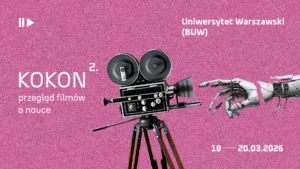
Trwa KOKON UW – przegląd filmów o nauce

Rozpoczęliśmy drugą edycję wydarzenia zapoczątkowanego w zeszłym roku. Przegląd odbywa się w Bibliotece Uniwersyteckiej w…

15 edycji odwagi i innowacji. BraveCamp z jubileuszową galą finałową!

Za nami gala finałowa 15. edycji BraveCamp – Akademii Przedsiębiorczości Inkubatora Uniwersytetu Warszawskiego. Tydzień intensywnej…

Premiera raportu „Just Start: BraveCamp Akademia Przedsiębiorczości Studenckiej 2017–2025”

Często podnoszonym wyzwaniem polskiej edukacji jest nauka przedsiębiorczości. Jak przekazać wiedzę i umiejętności, by skutecznie…

Zobacz również

IV Targi Kół Naukowych UW

IV Targi Kół Naukowych UW za nami!

Inauguracja 6. edycji programu Mentoring UW; na zdjęciu uczestnicy wydarzenia

Inauguracja 6. edycji programu Mentoring UW za nami!

Trwa KOKON UW – przegląd filmów o nauce

Zdjęcie pięciu laureatów 15. edycji BraveCamp Inkubatora UW

15 edycji odwagi i innowacji. BraveCamp z jubileuszową galą finałową!

Facebook Youtube Instagram Linkedin

Powiązane strony

  • Uniwersytet Warszawski
  • Serwis Naukowy UW
  • Nauka Sprawdza
  • TEDx University of Warsaw
  • Inicjatywa Akademicka Warszawa

Nasze projekty

  • Tydzień Noblowski UW
  • Nauka Sprawdza
  • #UWagaNauka
  • KOKON UW
  • TEDx UW
  • BraveCamp
  • Mentoring UW

CWiD

  • O nas
  • Kontakt
  • Nasi partnerzy
  • Zamówienia publiczne
  • Praca
  • Deklaracja dostępności
  • Mapa strony
Centrum Współpracy i Dialogu UW
Zarządzaj zgodą
Aby zapewnić jak najlepsze wrażenia, korzystamy z technologii, takich jak pliki cookie, do przechowywania i/lub uzyskiwania dostępu do informacji o urządzeniu. Zgoda na te technologie pozwoli nam przetwarzać dane, takie jak zachowanie podczas przeglądania lub unikalne identyfikatory na tej stronie. Brak wyrażenia zgody lub wycofanie zgody może niekorzystnie wpłynąć na niektóre cechy i funkcje.
Funkcjonalne Zawsze aktywne
Przechowywanie lub dostęp do danych technicznych jest ściśle konieczny do uzasadnionego celu umożliwienia korzystania z konkretnej usługi wyraźnie żądanej przez subskrybenta lub użytkownika, lub wyłącznie w celu przeprowadzenia transmisji komunikatu przez sieć łączności elektronicznej.
Preferencje
Przechowywanie lub dostęp techniczny jest niezbędny do uzasadnionego celu przechowywania preferencji, o które nie prosi subskrybent lub użytkownik.
Statystyka
Przechowywanie techniczne lub dostęp, który jest używany wyłącznie do celów statystycznych. Przechowywanie techniczne lub dostęp, który jest używany wyłącznie do anonimowych celów statystycznych. Bez wezwania do sądu, dobrowolnego podporządkowania się dostawcy usług internetowych lub dodatkowych zapisów od strony trzeciej, informacje przechowywane lub pobierane wyłącznie w tym celu zwykle nie mogą być wykorzystywane do identyfikacji użytkownika.
Marketing
Przechowywanie lub dostęp techniczny jest wymagany do tworzenia profili użytkowników w celu wysyłania reklam lub śledzenia użytkownika na stronie internetowej lub na kilku stronach internetowych w podobnych celach marketingowych.
  • Zarządzaj opcjami
  • Zarządzaj serwisami
  • Zarządzaj {vendor_count} dostawcami
  • Przeczytaj więcej o tych celach
Zobacz preferencje
  • {title}
  • {title}
  • {title}
Welcome Back!

Sign in to your account

Nazwa użytkownika lub adres e-mail
Hasło

Nie pamiętasz hasła?