
A treatise on outer space
The 20th century witnessed the beginning of the space race involving the major powers – primarily the United States and the Soviet Union. At the time, dreams of space conquest were strictly political in nature. Space exploration was no longer just an ambitious man’s dream to learn about extraterrestrial reality, to discover what really hides in space and on other planets. Space aspirations then became part of the struggle for hegemony, domination over opponents. The space race was part of a multi-faceted rivalry between the United States and the Soviet Union that went down in history as the Cold War.
Space was seen as another area that could be appropriated and thus used against a political rival – including in a military context. In view of this situation, and because of the first extraterrestrial successes, it became necessary to regulate a number of issues related to space exploration. The aforementioned issues are regulated by international space law, which is a branch of international law. This law consists of a number of international agreements, concerning, among other things. the legal status of space, the purposes for which space travel is undertaken, or the responsibility of individual states for damage caused in connection with it.
One of the key acts of international space law is the so-called „Space Law. A treatise on space. It was signed on January 27, 1967 in London, Moscow and Washington. The treaty became effective on October 10, 1967. Today, 111 countries – including Poland – are parties to the agreement.
According to the treaty, „outer space, including the Moon and other celestial bodies. Is not subject to appropriation” by any state. Space exploration and use, meanwhile, are „an achievement of all mankind” and „conducted or performed for the benefit and in the interest of all countries.” During the use and exploration of space, states are obliged to act in accordance with the principles of „cooperation and mutual assistance,” and the decisions they make should take into account the interests of all states that are parties to this agreement. Interestingly, facilities (stations, space vehicles or other equipment) located on celestial bodies are to be made available to other countries „on a reciprocal basis.” This means that representatives of other countries can visit these facilities after announcing such a visit in advance.
Article IV. The treaty explicitly states a ban on the use of space and celestial bodies for military purposes. Among other things, it is forbidden to. introducing into space „any objects that carry nuclear weapons or any other weapons of mass destruction” or „establishing military bases, installations and fortifications on celestial bodies, testing any type of weapons on them and conducting military maneuvers.” Space exploration can only be guided by peaceful goals.
States that are parties to this agreement are obliged to help the cosmonauts, considered „envoys of humanity in space.” This assistance can take many forms. For example: should a cosmonaut or astronaut participating in a space mission find himself or herself on the territory of a state that is party to the treaty (e.g., as a result of an emergency landing), the authorities of that state are obliged to return him or her „safely and without delay” to the state where the spacecraft was registered.
An important issue addressed in the treaty is also the international responsibility of states for activities undertaken in space, regardless of whether the space mission is conducted by a government institution, non-governmental institution or legal entities. States are also liable for any damage caused by an object they send into space. This liability covers damage occurring both on Earth, in airspace and in space.
This is just a slice of the regulations devoted to the exploration and use of space that make up international space law. As we have already mentioned, this section of international law creates a series of agreements that discuss and regulate in detail both the issues mentioned above and those not mentioned here. However, we hope that we have answered at least some of your questions. If you would like to ask anything else, write in the comments. Of course, we encourage you to read the entire treatise. In the link below you will find a Polish translation of this document.

The Agreement on the Principles of the Activities of States in the Exploration and Use of Outer Space, Including the Moon and Other Celestial Bodies, so-called. A Treatise on Space, translated from http://libr.sejm.gov.pl/tek01/txt/onz/1967a.html.
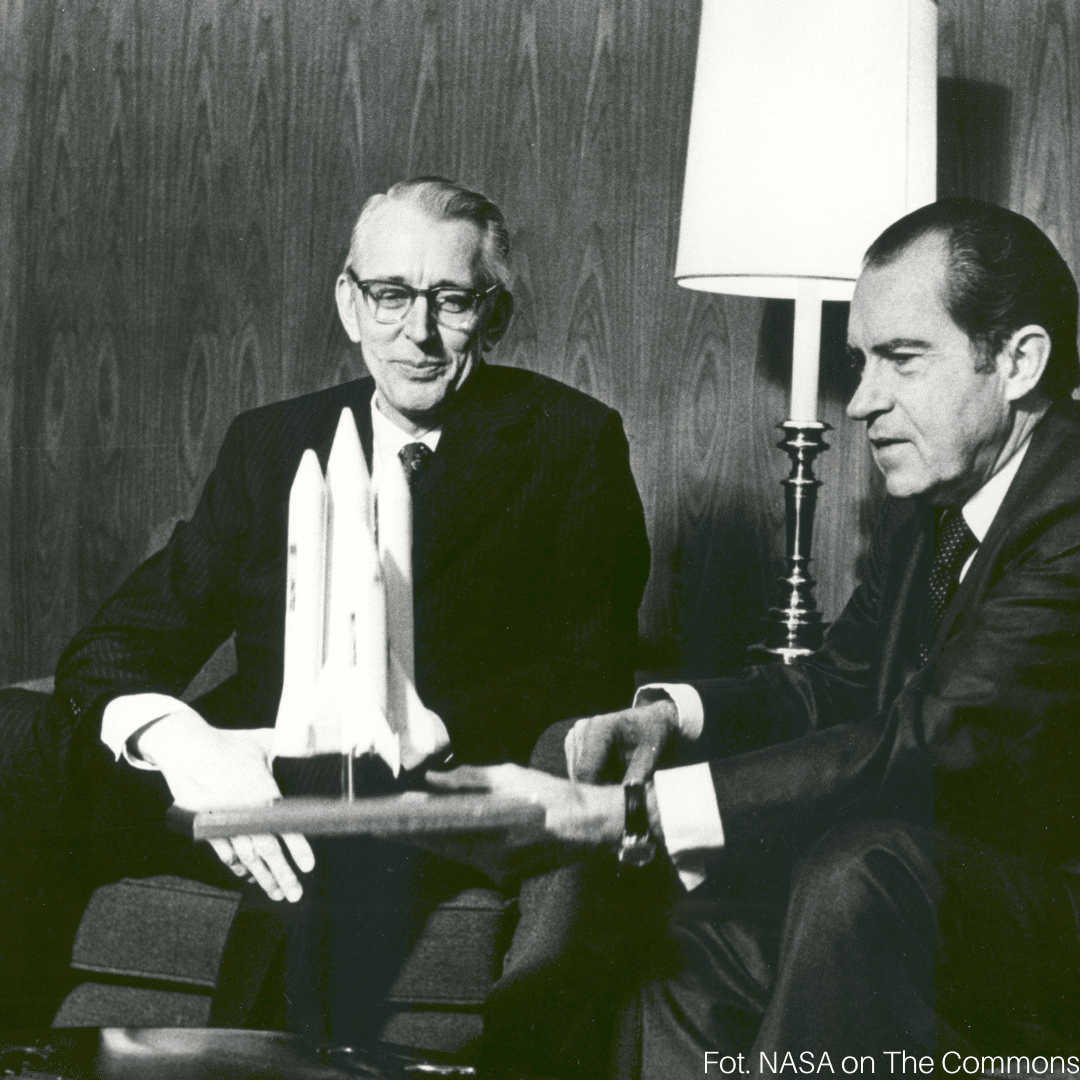
Photo. NASA on The Commons
#uw #science #cwiduw #seekingknowledge #CWiDUW #wkosmos #scienceislocal #ExpertsUW.