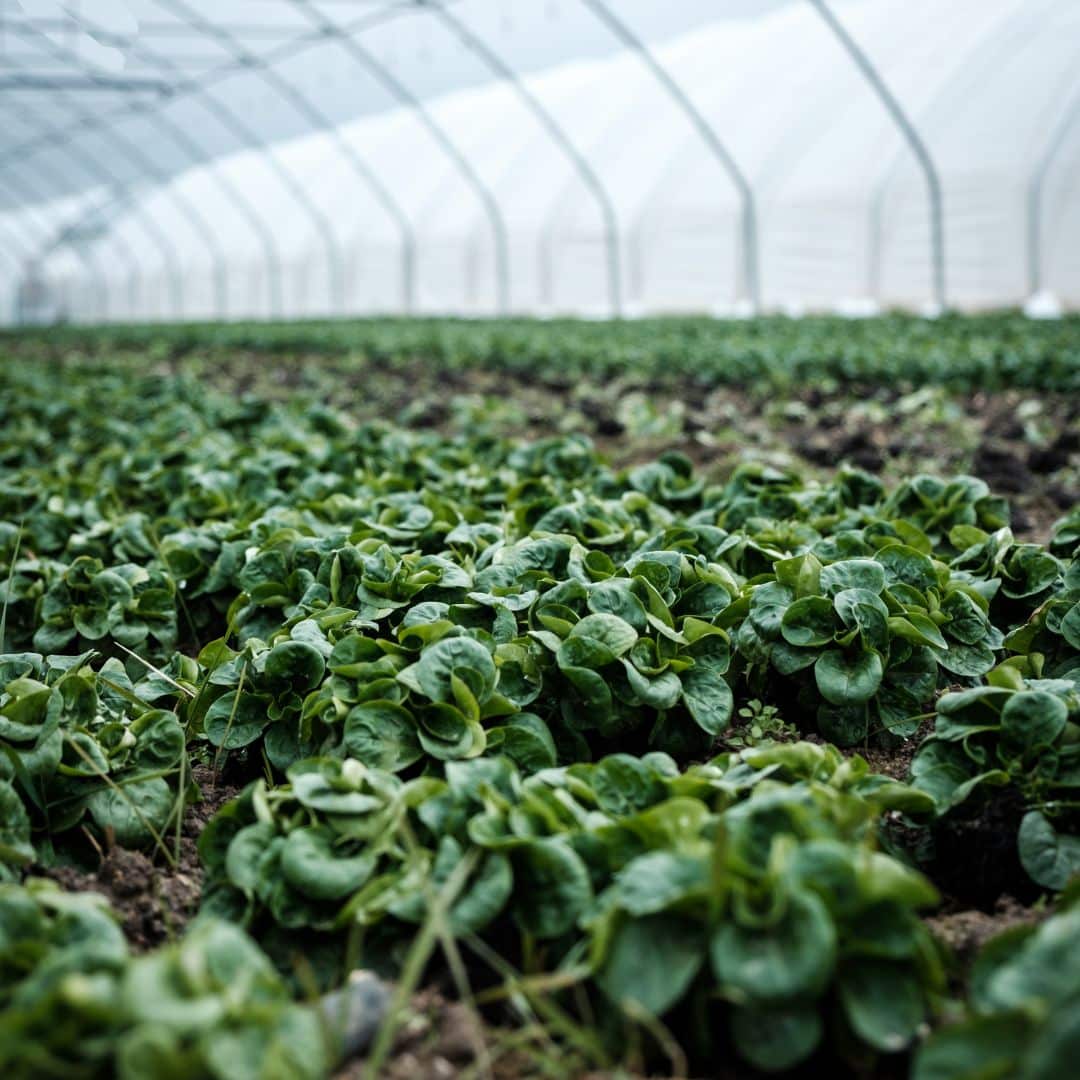
Ever wondered how it is that grocery stores offer us fresh fruits and vegetables in the winter, even though the weather in Europe is not conducive to cultivation?
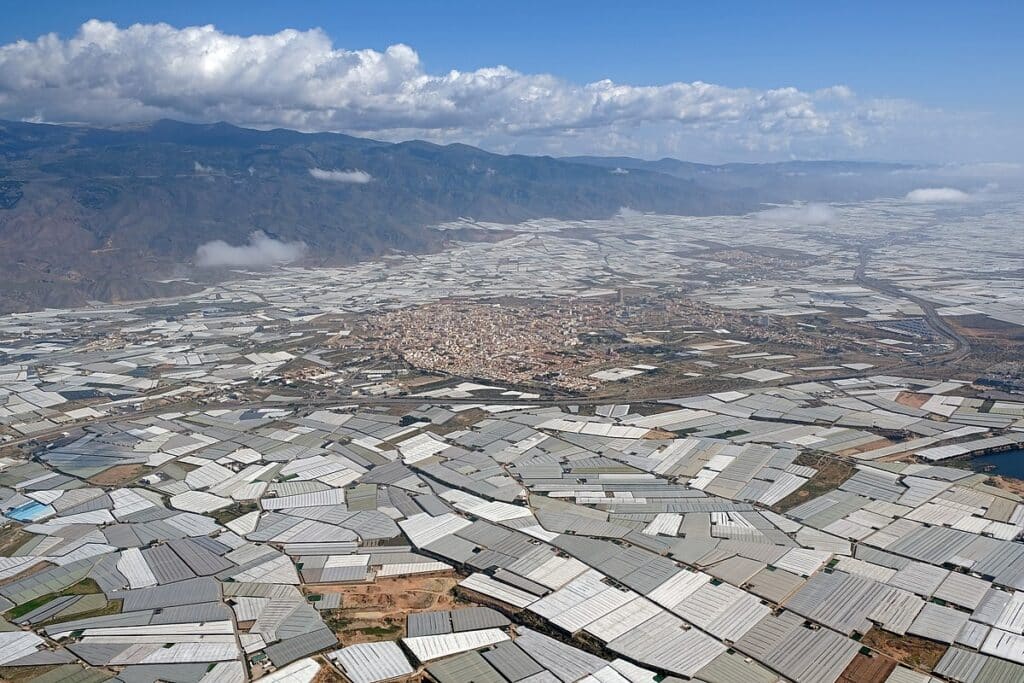
One only has to go to Spain’s southern coast near Almeria to understand the situation. There, the valleys between towering mountains protected by national parks (such as the Sierra Nevada) are covered with sheets of gray plastic. Why? These sheets are plastic greenhouses stretching to the horizon, where vegetables and fruits are industrially grown for sale in supermarkets across Europe. In the relentless heat, consuming tons of plastic and generating waste that pollutes not only the soil but also the nearby sea, a „sea of plastic” has been created. The number of these greenhouses is frightening – and they can be seen even from space.
Photo. kallerna, CC BY-SA 4.0
Therefore, we decided to answer the question: how does agricultural activity affect the earth’s water resources and the conditions of aquatic organisms?
Read the statement by Dr. Marzena Szostakiewicz-Hołownii of the UW Department of Geology.
When using water for agricultural purposes, there is a paradox. On the one hand, fresh, good-quality water is a key natural resource for agriculture, but on the other hand, agriculture is considered the largest, in terms of area, focus of groundwater pollution. A good example illustrating this fact is Poland, where, according to the Central Statistical Office, about 60% of the country’s area is farmland. The impact of agricultural activities on the most valuable resource, which is groundwater, should be considered both in terms of quantity and quality. Thus, agriculture in relation to groundwater generates (1) a blue water footprint, indicating the amount of water used that is extracted from groundwater resources, and (2) a gray water footprint, indicating the amount of water that is contaminated in the production process.
It is estimated that agricultural water use accounts for as much as 69% of the world’s water consumption, making it clear that this branch of the economy is the world’s largest user of water. With that said, the demand for water for food production varies strongly geographically. According to the European Environment Agency, in Europe, water for agricultural purposes accounts for an average of 24% of total water withdrawals, but in southern countries like Spain and Greece, agriculture consumes more than 70% of total water withdrawals. Globally, the largest share of agriculture in water consumption was found in Africa and Asia (more than 89%). In terms of groundwater, the best source of water for agricultural purposes is rainfall or surface water. However, in areas or periods characterized by a deficit of the aforementioned water, it is necessary to provide additional amounts from groundwater resources.
The consequence of overexploitation, exceeding groundwater recharge, will be the disappearance of groundwater resources. The problem of diminishing groundwater resources as a result of over-extraction for agricultural purposes is already being observed and documented in large areas of Southeast Asia, the Middle East and northern Africa, among others. No less important from an environmental point of view are pollutants generated by agriculture among which the most common are mineral and organic fertilizers, crop protection products and fuels. These substances migrating into the groundwater and spreading in the aquifer can cause qualitative degradation of the aquifer. Only large-scale, monoculture farms are often considered foci of groundwater pollution. However, any agricultural activity, even an organic one that relies on natural fertilizers such as manure or slurry, can pose a threat to groundwater by contaminating it with nitrogen and phosphorus compounds.
In determining the impact of agriculture on groundwater, the issue of land reclamation, used to increase the yields obtained, cannot be ignored. Drainage facilities, maintained in good condition and properly used by design, are dual-purpose. They allow water to be dammed, retaining it in the catchment area, and in times of drought, the water stored in the ditches can recharge groundwater increasing its supply. The second, primary, function of drainage facilities is to drain excess water, which in turn contributes to the depletion of groundwater resources. In the case of improper use, devastation or neglect of the technical condition of water damming facilities, the maintenance function ceases to be significant and the impact of land reclamation is in practice limited to increasing the drainage of groundwater, which consequently leads to the impoverishment of its resources.
Dr. Marzena Szostakiewicz-Hołownia / Department of Geology
Bibliography:
Inés Oort Alonso , The Environmental Impacts Of Greenhouse Agriculture In Almería, Spain, https://www.foodunfolded.com/article/the-environmental-impacts-of-greenhouse-agriculture-in-almeria-spain
The post is part of a series on natural heritage entitled „How to Live? – Naturally!”, which was created to draw attention to the need to protect the Earth’s natural heritage.
#naturalheritage #worldheritage #ExpertsUW #unesco #natural