Uniwersytet Warszawski | CWID Uniwersytet Warszawski | CWID
  • Dezinformacja
  • Tydzień Noblowski UW
  • Serwis Naukowy UW
  • Kino i nauka
  • TEDx
  • Konferencje
  • Akademia Przedsiębiorczości
  • Mentoring UW
  • Makerspace@UW
  • Biznes i nauka
  • Koła Naukowe
  • Programy grantowe
  • Warsztaty
  • Podcasty
  • Aktualności
Centrum Współpracy i Dialogu UWCentrum Współpracy i Dialogu UW
  • Dezinformacja
  • Tydzień Noblowski UW
  • Serwis Naukowy UW
  • Kino i nauka
  • TEDx
  • Akademia Przedsiębiorczości
  • Mentoring UW
  • Makerspace@UW
  • Biznes i nauka
  • Koła Naukowe
  • Programy grantowe
  • Warsztaty
  • Podcasty
Szukaj
  • Dezinformacja
  • Tydzień Noblowski UW
  • Serwis Naukowy UW
  • Kino i nauka
  • TEDx
  • Akademia Przedsiębiorczości
  • Mentoring UW
  • Makerspace@UW
  • Biznes i nauka
  • Koła Naukowe
  • Programy grantowe
  • Warsztaty
  • Podcasty
Śledź nas

Strona główna » Cosmos » Animals in space

Animals in space

2023/08/09
Udostępnij
4 min czytania

First animals aboard a rocket

Almost 65 years ago, or more precisely, on November 3, 1957, an unusual passenger – a female Laika – was aboard a spacecraft. It was launched into Earth orbit aboard Russia’s Sputnik 2. Thus, the dog became the first animal to be aboard a spacecraft performing an orbital flight. Unfortunately, however, the female did not survive it. It lasted only a few hours… In today’s post we would like to tell a little about the history of animal travel to space.

Fruit flies pioneer space flight

Although the Laika reached Earth’s orbit and became a symbol of extraterrestrial animal travel, it was not the first animal to appear in space. The first creatures to reach a place thought to be outer space were… fruit flies. These tiny creatures flew into space on February 20, 1947 and, curiously enough, returned safely to Earth.

First successes

On August 19, 1960, that is, 3 years after Laika’s tragic flight, the females Belka and Strelka were sent into orbit around the Earth. However – unlike their predecessor – they survived the flight and returned safely to our planet. Other living organisms were also on board, including. plants and mice. The flight took a total of 24 hours. Interestingly enough, after their return, one of the bitches, Strelka, gave birth to six puppies, and one of the puppies Nikita Khrushchev (1st Secretary of the Central Committee of the Communist Party of the Soviet Union) even gave to J. F. Kennedy!

The first chimpanzee in space – a representative of the human-like species

Less than half a year later – in January 1961 – the first representative of the human species – a chimpanzee, who was later named Ham – was sent into space. The flight lasted less than 17 minutes. The flight was an extremely difficult experience for the animal, but the chimpanzee survived. Interestingly, Hama’s mission took place just ten weeks before Yuri Gagarin’s flight into space.

For this, a satellite was sent into space in 2007, which just contained cockroaches. The flight lasted from September 14 to 26. Fertilization occurred during the flight, which resulted in Nadezhda, a female cockatiel, giving birth to 33 cockatiels – having already returned to Earth.

Controversy

Animals are sent into space and today. Such ventures, however, generate controversy, as with the use of animals in other scientific experiments, in which the subjects are unable to consent. In addition, the history of spaceflight confirms that the experience can be extremely taxing on animals. Many of these missions ended in their deaths.

Today’s missions involving animals are helping scientists further understand the effects of adverse space conditions on living organisms. In addition, such ventures aim to find answers to the question of what difficulties humans will face when they eventually reach Mars or when they stay in space even longer than before.

Bibliography:

https://www.rmg.co.uk/stories/topics/what-was-first-animal-space

https://cordis.europa.eu/article/id/29839-water-bears-survive-space-environment-study-shows/pl

#uw #science #cwiduw #seekingknowledge #CWiDUW #wkosmos #scienceislocal #ExpertsUW.
Tagi:learninglifepodcastspace

Aktualności

Podsumowanie I Ogólnopolskiej Konferencji Sieciującej Akademickie Inkubatory Przedsiębiorczości

Blisko 70 uczestników reprezentujących ponad 50 ośrodków akademickich z całego kraju. Dwa dni rozmów o rozwoju, inspirujących dyskusji i wymiany…

#UWagaNauka – 19 maja 2026

Okrągła, piąta edycja będzie przestrzenią wymiany doświadczeń i prezentacji praktyk, które wspierają rzetelną i atrakcyjną…

IV Targi Kół Naukowych UW za nami!

Po raz kolejny wraz z Samorządem Studentów Uniwersytetu Warszawskiego oraz Radą Organizacji Naukowych, Społecznych i…

Inauguracja 6. edycji programu Mentoring UW za nami!

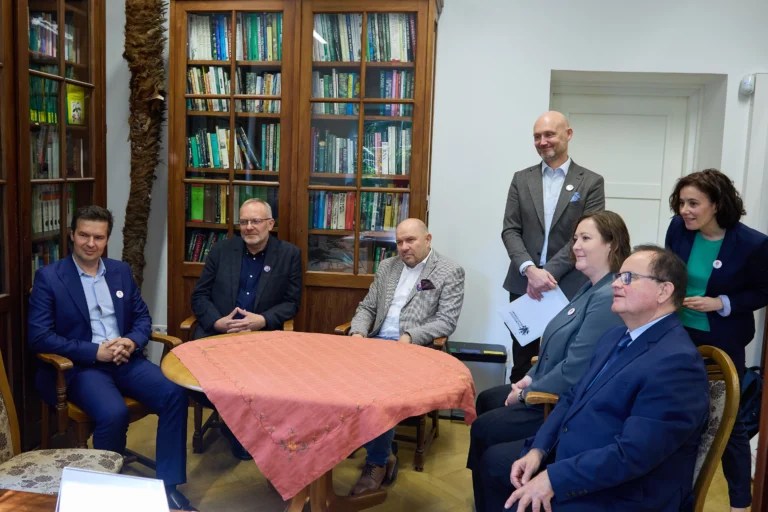
Wczoraj w Muzeum Uniwersytetu Warszawskiego odbyła się uroczysta inauguracja 6. edycji programu Mentoring UW, realizowanego…

Zobacz również

Podsumowanie I Ogólnopolskiej Konferencji Sieciującej Akademickie Inkubatory Przedsiębiorczości

Nabór na granty „Nauka Sprawdza” – zdobądź 20 tysięcy!

#UWagaNauka – 19 maja 2026

IV Targi Kół Naukowych UW

IV Targi Kół Naukowych UW za nami!

Facebook Youtube Instagram Linkedin

Powiązane strony

  • Uniwersytet Warszawski
  • Serwis Naukowy UW
  • Nauka Sprawdza
  • TEDx University of Warsaw
  • Inicjatywa Akademicka Warszawa

Nasze projekty

  • Tydzień Noblowski UW
  • Nauka Sprawdza
  • #UWagaNauka
  • KOKON UW
  • TEDx UW
  • BraveCamp
  • Mentoring UW

CWiD

  • O nas
  • Kontakt
  • Nasi partnerzy
  • Zamówienia publiczne
  • Praca
  • Deklaracja dostępności
  • Mapa strony
Welcome Back!

Sign in to your account

Nazwa użytkownika lub adres e-mail
Hasło

Nie pamiętasz hasła?

Centrum Współpracy i Dialogu UW

Zarządzaj zgodą

Aby zapewnić jak najlepsze wrażenia, korzystamy z technologii, takich jak pliki cookie, do przechowywania i/lub uzyskiwania dostępu do informacji o urządzeniu. Zgoda na te technologie pozwoli nam przetwarzać dane, takie jak zachowanie podczas przeglądania lub unikalne identyfikatory na tej stronie. Brak wyrażenia zgody lub wycofanie zgody może niekorzystnie wpłynąć na niektóre cechy i funkcje.

Funkcjonalne Zawsze aktywne

Wymagane do prawidłowego działania strony, bezpieczeństwa oraz zapamiętania Twojej decyzji.

Statystyka

Pomagają mierzyć oglądalność i jakość strony.

Marketing

Pozwalają mierzyć kampanie i personalizować reklamy.

Oświadczenie o prywatności