Space the hope of explorers
It is difficult to count all the stories, movies, comic books or books in which Earthlings faced dangerous visitors from the Red Planet. Mars is named after the ancient Roman god of war. The same god in Greek mythology appeared as Ares. The choice of the name Mars was influenced by the planet’s reddish color – associated with blood and wartime conflagration.
Where does the distinctive color of Mars come from?

Many rocks on Mars contain a significant amount of iron. When they are exposed to external conditions they „oxidize”. This leads to the well-known phenomenon of rust formation. As the rusty dust from the rocks rises into the planet’s atmosphere, the Martian sky, observed from a considerable distance, turns red. Interestingly – the color of the surface of Mars itself, viewed „up close”, is rather brown. Depending on what minerals are nearby, some landscapes can also turn golden or even greenish in color.
How can the surface of Mars be viewed „up close” today?
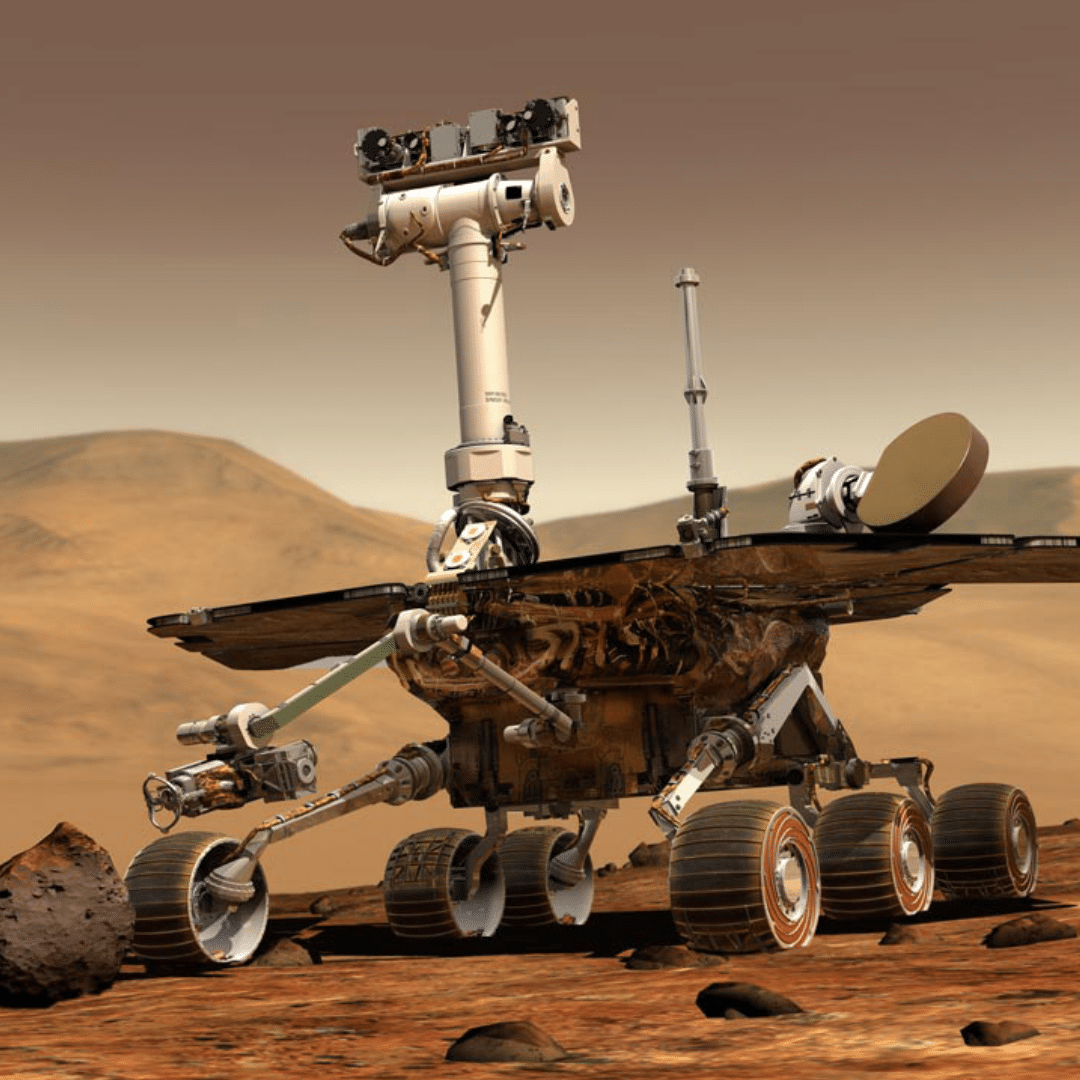
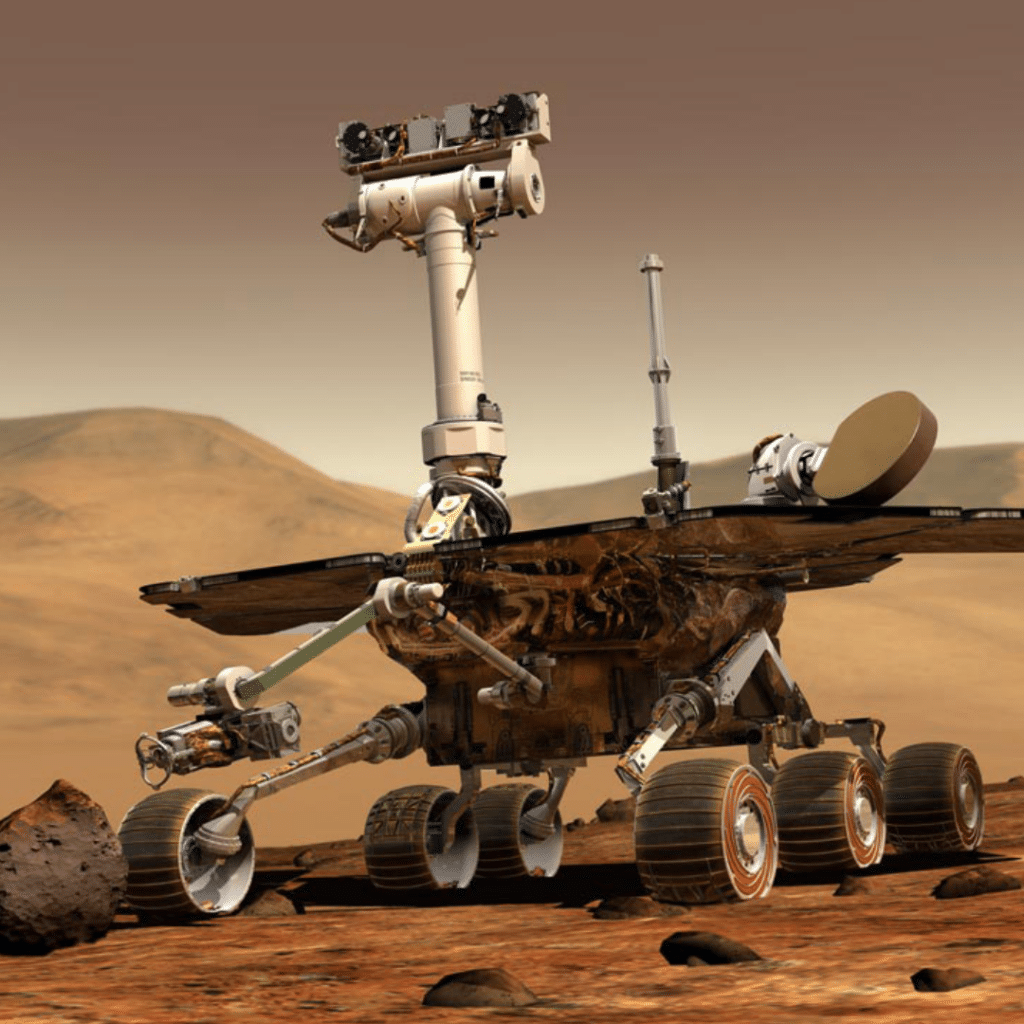
After all, despite many ambitious plans, the Red Planet remains a space where man has never been… Man – no, but the machines created by him: by all means! Such machines include, for example, the Mars rovers. These are motorized vehicles adapted to move on the surface of Mars. Among the advantages of rovers are: the ability to explore a significant area of the planet and the option to direct them to the most interesting parts of the explored slice of the planet’s surface.
The first rover to reach the surface of the Red Planet was the Soviet PrOP-M in 1971. Of course – since then, technological advances have made it possible to significantly modify the solutions used in such devices. And speaking of progress – it’s worth knowing that Mars rover competitions have been held on Earth for years. They are organized as part of the Rover Challenge Series around the world (including in Poland).
Rover Challenge Series
The aforementioned competition involves, among other things, steering a rover constructed by a given team over a specially prepared obstacle course. Its surface – created from several hundred tons of red earth – mimics that of Mars. The tasks of robots traversing the obstacle course include, for example, taking soil samples and securing them for further testing.
Warsaw Rover Team at the University of Warsaw
The described competition has no secrets for members of the University of Warsaw Rover Team, which was established at the UW Department of Physics. The team earned, among other things. 2nd place at the 2020 Indian Rover Challenge, 3rd place at the Canadian International Rover Challenge 2019 and 3rd place in the 2016 UK Mars rover competition. As Maciej Bartylak of the University of Warsaw Rover Team said after one of these events, describing preparations for the rover competition:
„At the outset, it starts with setting expectations for the next design. Both basic functionality (e.g., communication range or depth from which soil samples are taken) and various more or less necessary improvements are then defined (…). A design is then created that implements these requirements. We verify some functionalities on prototypes. Then we buy or manufacture all the necessary components, integrate the whole thing and conduct tests. In practice, the rover is never finished – corrections and improvements are made all the time, often even at the competition itself.”
Currently, according to Jan Dziedzic of the University of Warsaw Rover Team, most of the competitions have been temporarily put on hold, although competitions in Kielce, for example, are already planned for this fall. Instead, work on the Mars rover by a team from the University of Warsaw continues unabated, related to improving the vehicle’s controls, range and wheels, among other things.
Commercial activities in space
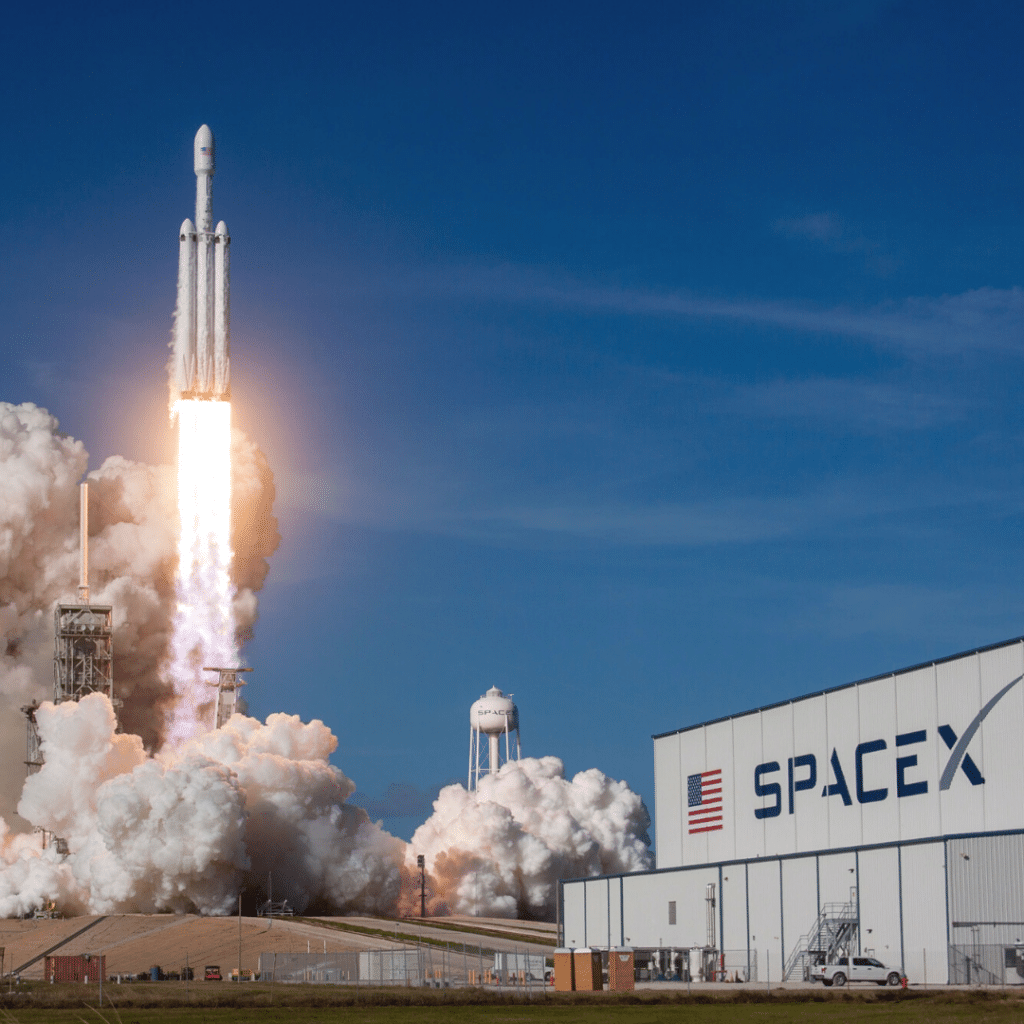
In December it was announced that Time magazine’s Man of the Year 2021 was Elon Musk, currently the richest man in the world. The honor is awarded to the person or group of people who (according to the weekly) had the greatest impact on the reality around us in a given year. Musk is the founder and managing director of SpaceX, as well as managing director of Tesla, Inc. and founder of The Boring Company – and these are just some of his roles. As Time writes: „[…] there are few people who have had a greater impact on life on Earth, and potentially extraterrestrial life, than Musk.”
In recent years, Musk has become one of the faces of the new era in the history of space exploration that we are now entering, namely the commercialization of space.
SpaceX, which he founded in 2002, is an American company focused on the space industry. The company builds and sends rockets and spacecraft into space. SpaceX’s ambitions reach high – leading among them is the colonization of Mars.
Commercialization of space
Commercialization of space means the massive use and exploration of space by private entrepreneurs. This means, among other things. The appearance in orbits around the earth of a large number of private satellites. An example is the Starlink telecommunications satellite system being built by SpaceX. Satellites under this program have been sent since 2019. Its main goal is to provide Internet services on Earth. By 2027, 12,000 devices sent by SpaceX are expected to be in orbit around the Earth.
Space tourism
The commercialization of space is also linked to the development of space tourism. Recently, we witnessed the first flights, whose participants were wealthy entrepreneurs. Richard Branson, founder of Virgin Galactic, flew into space on July 11, 2021. Branson’s company is involved in the design and development of spacecraft specifically for tourism purposes. A few days later, on July 20, Jeff Bezos, founder of Blue Origin, followed in Branson’s footsteps. On board the New Shepard spacecraft were three people in addition to Bezos, including Bezos’ brother.
However, the use of space for commercial purposes is controversial. This is primarily about issues related to space litter. Hundreds of thousands of objects identified as space junk are already orbiting the Earth. It is worth remembering that each of these objects poses a potential threat to future space missions.
However, a new era in the history of human space exploration is already a reality. This provides new – hitherto unknown – opportunities and paths of development for humanity. However, the potential dangers of such extensive human activity in space should not be overlooked.
Who will conquer space?
Until recently, state and international organizations were responsible for space flight. Today, this situation is changing. Exploration of extraterrestrial space has become attractive to private investors….
– What effects will the commercialization of space have?
– Who will win the race for dominance in space?
– What does this mean for the future of spaceflight?
Dr. Milena Ratajczak of the UW’s Astronomical Observatory answers these and other questions during a conversation with Patrycjusz Wyżga as part of the „Into Space” podcast.

Bibliography:
https://time.com/person-of-the-year-2021-elon-musk/
#uw #science #cwiduw #seekingknowledge #CWiDUW #wkosmos #scienceislocal #ExpertsUW.