Przejdź do treści
Uniwersytet Warszawski | CWID Uniwersytet Warszawski | CWID
  • Dezinformacja
  • Tydzień Noblowski UW
  • Serwis Naukowy UW
  • Kino i nauka
  • TEDx
  • Konferencje
  • Akademia Przedsiębiorczości
  • Mentoring UW
  • Makerspace@UW
  • Biznes i nauka
  • Koła Naukowe
  • Programy grantowe
  • Warsztaty
  • Podcasty
  • Aktualności
Centrum Współpracy i Dialogu UWCentrum Współpracy i Dialogu UW
  • Dezinformacja
  • Tydzień Noblowski UW
  • Serwis Naukowy UW
  • Kino i nauka
  • TEDx
  • Akademia Przedsiębiorczości
  • Mentoring UW
  • Makerspace@UW
  • Biznes i nauka
  • Koła Naukowe
  • Programy grantowe
  • Warsztaty
  • Podcasty
Szukaj
  • Dezinformacja
  • Tydzień Noblowski UW
  • Serwis Naukowy UW
  • Kino i nauka
  • TEDx
  • Akademia Przedsiębiorczości
  • Mentoring UW
  • Makerspace@UW
  • Biznes i nauka
  • Koła Naukowe
  • Programy grantowe
  • Warsztaty
  • Podcasty
Śledź nas

Strona główna » Cosmos » Cosmos in culture

Cosmos in culture

2023/08/09
Udostępnij
6 min czytania

Motif in art

Cosmos – a word that almost immediately evokes a veritable avalanche of associations. One moment we are traversing interplanetary space on Han Solo’s ship; we are running in terror from a bloodthirsty alien through the claustrophobic corridors of an old space base; we are gazing with delight at a strangely beautiful ballet of satellites, moving – as in „A Space Odyssey”. – to the rhythm of a Strauss waltz… But, after all, cosmic inspiration in human creativity is as old as art itself and is not limited to its „pop” variety.

Moreover, it was art that gave concrete shape to ideas about the cosmos, while at the same time – at the beginning at least – showing and stigmatizing human daring in the face of the immensity of the sky. What else if not a warning against bravado in the exploration of the skies was, for example, the myth of the flight of Icarus? It is also worth asking whether the symbolism of the tower of Babel, which rises higher and higher, is also an admonition against overstepping the limits imposed on man. Also the physical ones that chain it to the surface of the Earth?

Mysterious space undiscovered by man

So the cosmos is shown in art as a space inaccessible to humans. A space that must not, on pain of punishment, be discovered or violated. But after all – the horror emanating from depictions of the cosmos in art over the years did not necessarily involve punishment. Don’t all the descriptions we know of alien invasions of Earth make a good argument that the cosmos – in all its mysteriousness – has troubled and continues to trouble man regardless of the human tendency to transcend the barriers imposed by nature? In principle – yes.

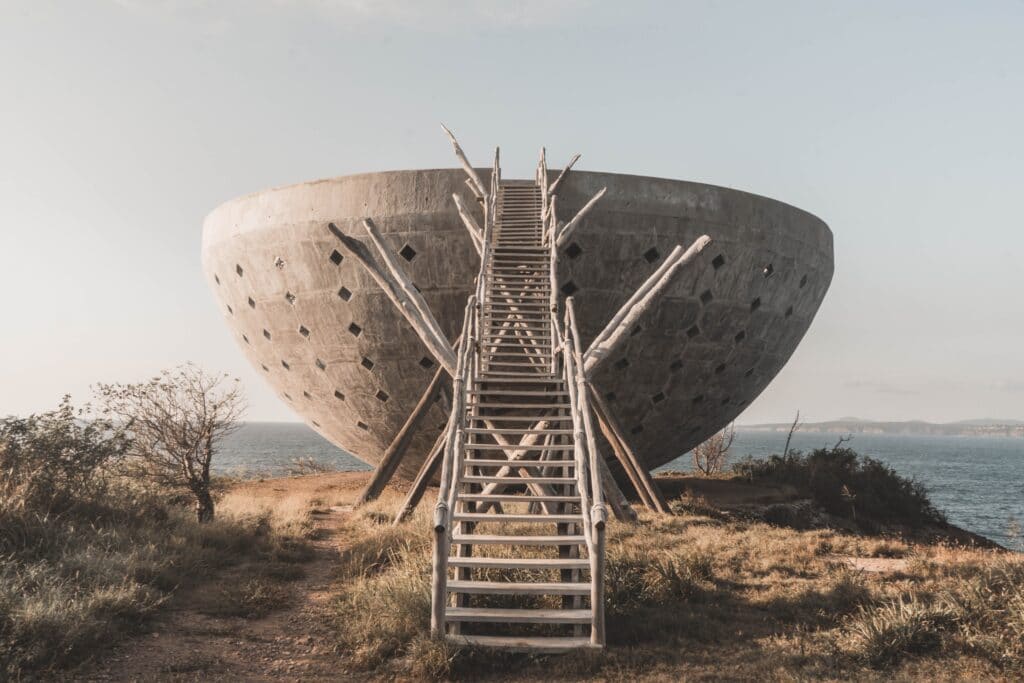
Creating an alternative reality

However, it is worth remembering, for example, that perhaps the most famous text on space invasion, H.G. Wells’ novel „War of the Worlds,” was a veiled commentary on the colonial policies of the British Empire. Thus, paradoxically, it was human violence that the writer portrayed as an invasion of bloodthirsty aliens. It is worth mentioning that as the exploitation of the Earth progressed, space – while still mysterious and threatening – began to be seen as an opportunity to find a second, alternative home for the inhabitants of our planet. If only to return to pop culture: the number of blockbuster movie scripts based on the idea of settling one of the celestial bodies is growing. And there is no indication that this situation will change anytime soon.

An infinity of contexts?

So, space as an inviolable, forbidden space for humans; as the habitat of an unknown (?) threat; and finally – as humanity’s hope for survival. But is it the only one? Certainly not! It seems impossible to exhaust all the meanings attributed to the cosmic abyss in literature and art. Ultimately – each and every one of us, looking with awe or horror into the starry sky, will encounter our own hopes and fears there.

What the great thinkers saw in space is discussed by Dr. Krzysztof Okolowski of the UW Department of Philosophy Philosophy at the University of Warsaw UW during a conversation with Patrycjusz Wyżga conducted as part of the CWiD UW W KOSMOS podcast.

YT_1920x1080__ 3

Do you read books by Stanislaw Lem? Probably so. The author of „Solaris” is one of the best-known writers – both in Poland and around the world. Anyway, Lem is not only a widely read science fiction writer but also a thinker.

We don’t want to conquer space at all, we just want to expand the Earth to its limits. Some planets are supposed to be desert like the Sahara, others icy like the pole or tropical like the Brazilian jungle. We are humane and noble, we don’t want to conquer other races, we just want to pass on our values to them and take over their heritage in return. We are supposed to be the Knights of the Holy Contact. This is the second falsehood. We are not looking for anyone but people. We don’t need other worlds. We need mirrors. We don’t know what to do with other worlds. All it takes is this one, and we’re already choking on it, wrote the creator of „Tales of the Robots.”

What, in contrast, were Stanislaw Lem’s hopes for the cosmos?
What is extraterrestrial space for philosophers?
Does it challenge human faith in the capabilities of reason?

#uw #science #cwiduw #seekingknowledge #CWiDUW #wkosmos #scienceislocal #expertsw.

Tagi:culturelearningliteraturespace

Aktualności

IV Targi Kół Naukowych UW

IV Targi Kół Naukowych UW za nami!

Po raz kolejny wraz z Samorządem Studentów Uniwersytetu Warszawskiego oraz Radą Organizacji Naukowych, Społecznych i Artystycznych zorganizowaliśmy Targi Kół Naukowych UW –…

Trwa KOKON UW – przegląd filmów o nauce

Rozpoczęliśmy drugą edycję wydarzenia zapoczątkowanego w zeszłym roku. Przegląd odbywa się w Bibliotece Uniwersyteckiej w…

15 edycji odwagi i innowacji. BraveCamp z jubileuszową galą finałową!

Za nami gala finałowa 15. edycji BraveCamp – Akademii Przedsiębiorczości Inkubatora Uniwersytetu Warszawskiego. Tydzień intensywnej…

Premiera raportu „Just Start: BraveCamp Akademia Przedsiębiorczości Studenckiej 2017–2025”

Często podnoszonym wyzwaniem polskiej edukacji jest nauka przedsiębiorczości. Jak przekazać wiedzę i umiejętności, by skutecznie…

Zobacz również

IV Targi Kół Naukowych UW

IV Targi Kół Naukowych UW za nami!

Inauguracja 6. edycji programu Mentoring UW; na zdjęciu uczestnicy wydarzenia

Inauguracja 6. edycji programu Mentoring UW za nami!

Trwa KOKON UW – przegląd filmów o nauce

Zdjęcie pięciu laureatów 15. edycji BraveCamp Inkubatora UW

15 edycji odwagi i innowacji. BraveCamp z jubileuszową galą finałową!

Facebook Youtube Instagram Linkedin

Powiązane strony

  • Uniwersytet Warszawski
  • Serwis Naukowy UW
  • Nauka Sprawdza
  • TEDx University of Warsaw
  • Inicjatywa Akademicka Warszawa

Nasze projekty

  • Tydzień Noblowski UW
  • Nauka Sprawdza
  • #UWagaNauka
  • KOKON UW
  • TEDx UW
  • BraveCamp
  • Mentoring UW

CWiD

  • O nas
  • Kontakt
  • Nasi partnerzy
  • Zamówienia publiczne
  • Praca
  • Deklaracja dostępności
  • Mapa strony
Centrum Współpracy i Dialogu UW
Zarządzaj zgodą
Aby zapewnić jak najlepsze wrażenia, korzystamy z technologii, takich jak pliki cookie, do przechowywania i/lub uzyskiwania dostępu do informacji o urządzeniu. Zgoda na te technologie pozwoli nam przetwarzać dane, takie jak zachowanie podczas przeglądania lub unikalne identyfikatory na tej stronie. Brak wyrażenia zgody lub wycofanie zgody może niekorzystnie wpłynąć na niektóre cechy i funkcje.
Funkcjonalne Zawsze aktywne
Przechowywanie lub dostęp do danych technicznych jest ściśle konieczny do uzasadnionego celu umożliwienia korzystania z konkretnej usługi wyraźnie żądanej przez subskrybenta lub użytkownika, lub wyłącznie w celu przeprowadzenia transmisji komunikatu przez sieć łączności elektronicznej.
Preferencje
Przechowywanie lub dostęp techniczny jest niezbędny do uzasadnionego celu przechowywania preferencji, o które nie prosi subskrybent lub użytkownik.
Statystyka
Przechowywanie techniczne lub dostęp, który jest używany wyłącznie do celów statystycznych. Przechowywanie techniczne lub dostęp, który jest używany wyłącznie do anonimowych celów statystycznych. Bez wezwania do sądu, dobrowolnego podporządkowania się dostawcy usług internetowych lub dodatkowych zapisów od strony trzeciej, informacje przechowywane lub pobierane wyłącznie w tym celu zwykle nie mogą być wykorzystywane do identyfikacji użytkownika.
Marketing
Przechowywanie lub dostęp techniczny jest wymagany do tworzenia profili użytkowników w celu wysyłania reklam lub śledzenia użytkownika na stronie internetowej lub na kilku stronach internetowych w podobnych celach marketingowych.
  • Zarządzaj opcjami
  • Zarządzaj serwisami
  • Zarządzaj {vendor_count} dostawcami
  • Przeczytaj więcej o tych celach
Zobacz preferencje
  • {title}
  • {title}
  • {title}
Welcome Back!

Sign in to your account

Nazwa użytkownika lub adres e-mail
Hasło

Nie pamiętasz hasła?